Enter Stage Left: Challenges facing live performance in Australia
9
July
2026
4
min read
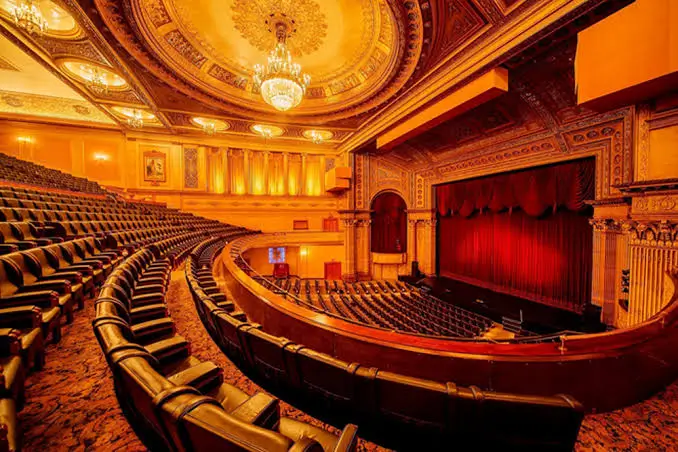
Australia’s performing arts sector has seen a run of cancellations and scaled-back seasons in recent months, leading to calls for government support. Here, we look at the key challenges facing the sector.
Key facts and figures
- Australia's cultural and creative sector contributed $67.4 billion to the economy in 2023-24, or 2.5 per cent of GDP, and directly employs almost 600,000 workers.
- Live performance generated more than $3 billion in ticket sales in 2024 across more than 31 million ticketed attendances – more than all major sporting codes combined.
- The average Australian household spent $292 each week on recreation and culture in 2025; the average live performance ticket price is $115.12.
- Investment in arts and culture by all three levels of government was $8.6 billion in the 2023–24 financial year. However, per capita expenditure by the Federal Government in 2023-43 dropped to just $114 per year – the lowest figure on record.
- A Creative Australia survey found 74 per cent of Australians attended a live arts event in 2025 – the highest level on record. However, 60 per cent said ticket prices were the biggest barrier to going more often.
Policy and Political Landscape
National Cultural Policy
The Federal Government's cultural policy framework, Revive, is a five-year plan that launched in 2023 and sets out a plan for Australia's arts, entertainment and cultural sector. It was widely welcomed as recognition of the sector's importance coming out of the COVID-19 pandemic, and was designed to rebuild and renew the arts after a period of disruption.
Backed by a commitment of $286 million over four years, it addressed some long-standing funding gaps, including for contemporary music and writing, and established Creative Australia as the Government's principal arts investment and advisory body.
However, some have argued that, despite good intentions, Revive has not achieved what it was designed to. The Australia Institute has been critical, highlighting that despite Australia’s overall employment rate recovering quickly after COVID, employment in the arts is yet to return to pre-COVID levels. It also notes that, in real terms, government funding has fallen by more than half a billion dollars a year when adjusted for inflation.
“The sequel to Australia’s National Cultural Policy should be titled ‘Resuscitate’. Many sectors are on life support. You can have all the policies you like, but there is simply no substitute for adequate funding.” –The Australia Institute
The Federal Government is now developing the next national cultural policy, with consultation underway and a new policy due in late 2027.
Proposed Tax Rebates and Incentives
The sector has launched a campaign for a 40 per cent rebate on pre-production costs, open to commercial and not-for-profit producers alike, modelled on the UK's Theatre Tax Relief and incentives which are also available to Australia’s film and television industry.
The UK’s Theatre Tax Relief rebate was introduced in 2014, and has helped fund productions across the country and encouraged private investment. It lets production companies claim back up to 45 per cent of what they spend making a show, including on sets, costumes and rehearsals. If a production is losing money, the Government pays that percentage back in cash; if it is profitable, it reduces the company’s tax bill.
The Society of London Theatre estimated that £38 million of Theatre Tax Relief in a single year drew at least £163 million of investment into productions; a return of more than four to one.
Advocates for a tax incentive contend that Australia's tax settings leave local producers unable to attract investment against markets that already offer generous incentives. Modelling commissioned by Live Performance Australia estimates a 40 per cent offset would be revenue-positive for government, returning $1.26 for every dollar foregone, generating around 4,151 jobs and adding $1.5 billion in economic activity.
However, critics argue that the “industry risks subsidising its own downfall”. One commentator suggested that an offset would mostly reward the producers already staging the biggest shows, push up rents at the handful of large commercial venues, and entrench incumbents at the expense of independent voices.
Other policy proposals put forward in recent weeks have included ‘Cultural Passes’, to offset the cost of tickets to events; voucher programs similar to the dining and hospitality initiatives provided during and post the pandemic.
Parliamentary Friendship Group
On 23 June 2026, a Parliamentary Friends of Live Performance Australia was established, co-chaired by Labor MP Cassandra Fernando and Nationals MP Sam Birrell.
‘Parliamentary Friends of’ Groups are informal groups of Members of Parliament who are interested in specific issues and sectors. The groups are apolitical and receive no sponsorship. They don’t have any specific powers, but are good for engagement with Parliamentarians and raising awareness of issues.
.webp)
Key challenges
Consumer realities
Cost-of-living pressures are changing how Australians spend on entertainment. With rising interest rates, higher rents, and increased grocery bills and utilities costs, many households now go to just one or two big productions a year instead of several, and arts and cultural activity is often the first thing to go when budgets tighten.
The average Australian household spent $292 each week on recreation and culture in 2025. However, the average theatre ticket is around $115; this is before additional costs such as food, parking, transport and merchandise.
There has also been a change in consumer behaviour when purchasing tickets. Audiences have moved from booking months ahead to buying in the week of (or day of) the show. This erodes the advance sales that producers have always relied on to commit to a tour, its marketing and its staffing, and makes real demand almost impossible to read until the last minute.
The cost of a small market
Australia is a small and geographically scattered market. This means that replica productions which recreate an overseas show exactly – down to its lighting and staging cues – are becoming increasingly challenging.
Australian producers carry the same overheads as Broadway or the West End, but have to make the money back without the millions of tourists who fill those theatres overseas.
One of Australia’s largest producers, Michael Cassel Group, has estimated that to move a show between cities in Australia adds an additional $1.5 million per move; this led to the Group opting not to tour ‘Hamilton’ in Adelaide and Perth.
The pandemic hangover and price shocks
While the pandemic is not the underlying cause of current issues, the sector is still trying to recover from it, particularly the sustained lockdowns. As NSW Arts Minister Graham put it: “Production costs went up during Covid and haven’t come down”.
Costs are rising for everything, everywhere – that’s nothing new, but the arts sector is particularly vulnerable to price shocks. The arena-scale ‘Aida’ bound for Adelaide Oval was scrapped after freight costs rose around 70 per cent in the wake of the Iran conflict, with the production needing 28 shipping containers to sail from Italy.
York Park Group’s Thoughts
The recent cancellations of major musical productions have been a blow to the industry and its dedicated audiences.
Behind every cancelled production is a workforce that does not get paid. A single large show is a small enterprise in its own right, drawing on performers, musicians, technicians, stage managers, wardrobe staff and venue employees. When it collapses, all of them lose income, in addition to flow-on impacts to other businesses which benefit from theatre attendance.
As Minister for the Arts, Tony Burke MP, stated: long running shows are “the backbone of secure employment in a notoriously insecure industry,” which is why the run of cancellations matters beyond any single show.
In the days immediately following the announcements that ‘Waitress: The Musical’ would end early and ‘Beetlejuice’ was cancelling its Brisbane season one week in and would not undertake a national tour, the industry body went to Canberra, producers participated in media interviews, and performers generated extensive social content. Theatre lovers united in sharing stories and memes on social platforms about how much the theatre means to them.
The mounting pressure on live performance has prompted a critical and open discussion about what policy settings are needed to ensure a sustainable, financially viable, productive and valued creative arts sector.
From stage plays to musicals, opera to dance, Australia has some of the most talented performers in the world. How do we ensure live performance not just continues, but thrives?
Often, the arts is considered niche; a ‘nice to have’; a luxury. Certainly, in a tight fiscal environment, it will increasingly be critical to promote to policy makers not only the value of the creative arts to society but the economic benefits, both directly and for spillover sectors.
Because, it's not just 2.5 hours of talented performers on stage, it's jobs for the crew, technicians, tradespeople, ushers and bar staff; it's flights and accommodation when people travel interstate to see a show, taxi fares to and from; it's meals and drinks before and after the show.
Australia's cultural and creative sector contributed $67.4 billion to the economy in 2023-24, or 2.5 per cent of GDP, and directly employs almost 600,000 workers.
So, the discussion needs to evolve from ‘the arts is nice enough’ to ‘the arts is a key part of our economy, and our society’.
21
September
2026
.jpg)
2026 Australian Political Book of the Year Shortlist announced
Read news article
21
September
2026
2026 Australian Political Book of the Year Shortlist announced
Download White Paper
20
September
2026
Victorians want conviction, not comfort
Read news article
20
September
2026
Victorians want conviction, not comfort
Download White Paper

To receive York Park Group updates via email, please subscribe
