Data Centres and Politics – Lessons from the 2026 US Midterm Elections
9
November
2026
4
min read
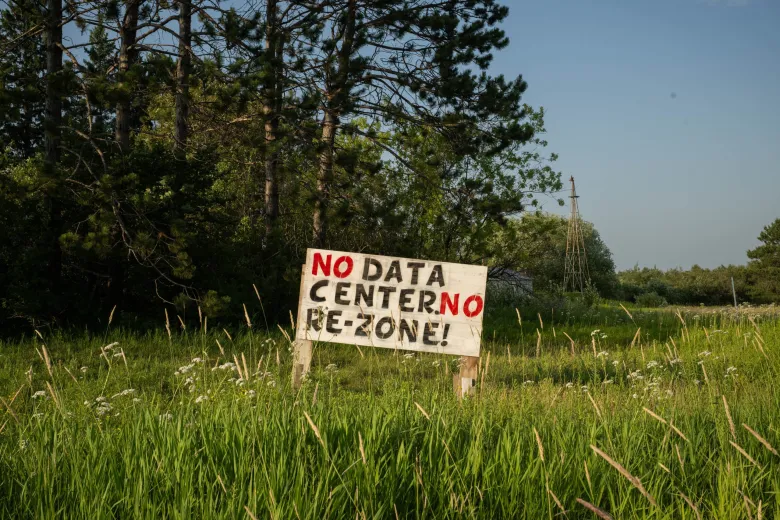
Data centre developers and investors in Australia can learn from what happened in the 2026 US Midterm Elections, and they’ll need a different playbook if Australia is to avoid the same fate.
Introduction
On Tuesday 03 November 2026, American voters backed limits on data centres in 40 of 41 local ballot measures.
Candidates who campaigned against data centres won in Texas, Ohio and Georgia, and Georgia's Public Service Commission changed hands after 30 years of Republican control.
While data centres didn’t decide the US Midterms, the debate surrounding them certainly had an influence.
What Happened in the US
In March 2026, Gallup polling found 71 per cent of Americans oppose an AI data centre in their area, with opposition spread almost evenly across Democrats and Republicans. The research pointed to higher electricity bills as the main driver.
The industry's response made matters worse. Money from AI-backed super PACs (Political Action Committees - specialised financial vehicles that pool funds for campaigns) became a liability for the candidates who received it, and pro-industry advertising coincided with falling support.
Carbon Direct, a US power and energy advisor, found that legal manoeuvres were interpreted as secrecy, and a review of 46 opposed projects found that those using NDAs, shell companies and undisclosed end users "consistently faced sharper and faster-organising opposition than projects with named tenants from the outset".
Key Facts and Figures
- 40 of 41 US local data centre ballot measures favoured limits (Ballotpedia, unofficial)
- 74% of US voters support requiring data centres to offset their electricity use through local rooftop solar and home weatherisation (Yale, Spring 2026)
- 44% of Australians oppose a data centre in their area; 23% support one (DemosAU, August 2026)
- 68% of Australians expect a local data centre to raise electricity prices (DemosAU, August 2026)
The Australian Landscape
At the time of writing, Australia has about 1.6 GW of data centre capacity compared to roughly 50 GW in the US. The pipeline, however, has grown to 26.8 GW – up 5.2 GW in six months – and Melbourne has overtaken Sydney in planned capacity.
Sentiment is already negative, and well below attitudes to higher-density housing. Market research firm, DemosAU, puts local data centres at net −21, against net +24 for apartment blocks. When it comes to community attitudes, data centres sit closer to nuclear power than to housing.
Regulations are already being created. National Cabinet (made up of the Prime Minister, Premiers and Chief Ministers) has backed mandatory national standards, with legislation targeted for early 2027.
The current Victorian Labor Government’s proposed Sustainable Data Centre Action Plan prohibits data centres on residentially zoned land, sets a 150-metre buffer from homes, and requires proponents to pay connection, network and water infrastructure costs.
The Victorian State Election will be held on Saturday 28 November, and so far the Victorian Greens have proposed a moratorium on new AI data centres; One Nation is proposing a ban on new data centres on agricultural land; and the Victorian Coalition is proposing designated precincts separated from communities.
What is relevant to Australia from the US experience?
Many of the US mechanisms are not relevant here. Australia has no citizen-initiated local ballot measures or recalls, and its energy regulators are independent rather than elected. Compulsory voting dilutes the activist intensity that decides low-turnout US contests, and US-scale super PAC spending has no Australian equivalent.
Australian governments are also ahead of the US on making data centres pay their own way. This changes the task for developers, which need to balance community sentiment against commercial returns.
However, the underlying politics is highly relevant. Opposition to data centres in Australia will appear through planning appeals, State Elections, minor-party preferences and direct action.
DemosAU research has found Coalition and Labor voters are net positive on data centres, and Greens and One Nation voters are net negative. This is the same populist split that made the issue potent in the US.
Distrust of big tech and AI is also highly relevant, as is any real or perceived impact on electricity bills or water supply.
York Park Group's Thoughts
We have extensive experience working with developers whose projects have become lightning rods for community groups and require integrated political, media and stakeholder engagement strategies and implementation.
We recommend five considerations for developers planning their communications strategy:
Know your community, site by site: Understand the community you are seeking to build in. Targeted research can be expensive, but existing data centre projects and the US experience show that the more you know about a community, the better you can communicate and manage risk.
All politics is local: Local MPs are not planning experts; they are the voice of their local community and need access to information from you as well as from the Government. Make sure the information you provide is relevant, then work with them to understand what their community needs. Complement this with your direct engagement with key decision makers.
Disclose early and don’t over message: The approach of Decide > Announce > Defend invites opposition. Rather, name the proponent and, where possible, the end user, and publish energy, water and noise data before lodgement. Our experience and the research on social licence shows that procedural fairness is the strongest driver of trust. Developers who act with conviction early are less likely to face community opposition.
Own the enabling works: Communities and markets treat poles, lines and substations as part of the project, whoever delivers them. Coordinate with distributors on routes, undergrounding and consultation, budget for remediation before works begin and fix noise and siting issues before offering community benefits. A united voice with a clear plan is much easier for the community to understand.
Think local project and national reputation: How you communicate at a local level needs to reflect the values and ethos of your company at a national level. Consistency of message at every level helps build trust.
29
October
2026

The 2026 Australian Political Book of the Year is…
Read news article
29
October
2026
The 2026 Australian Political Book of the Year is…
Download White Paper
26
October
2026

Preparing for the Big Build Royal Commission
Read news article
26
October
2026
Preparing for the Big Build Royal Commission
Download White Paper

To receive York Park Group updates via email, please subscribe
